
Start with the pattern
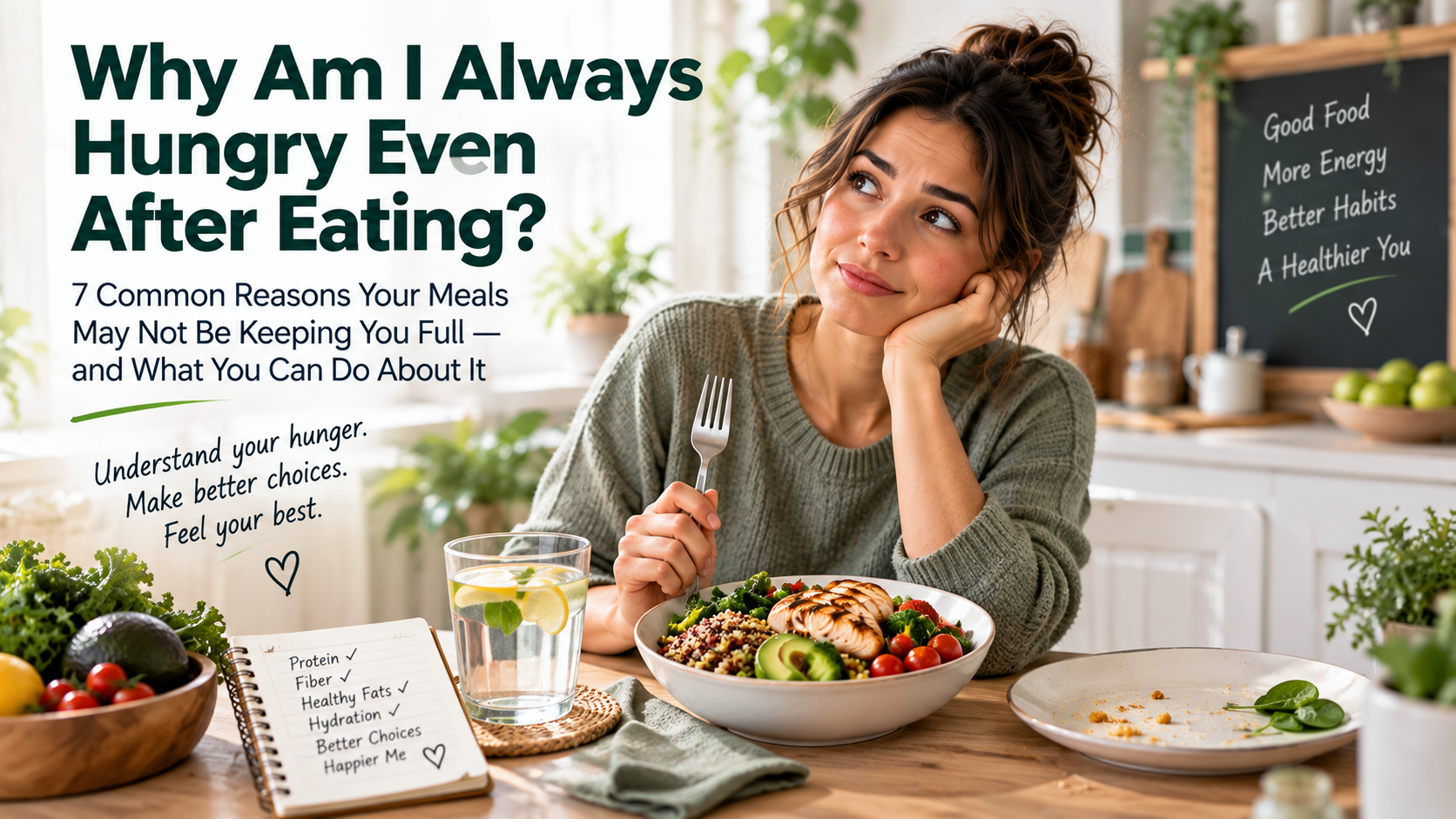
Look at several days, not one unusually hungry afternoon. Note when hunger appears, what the previous meal contained, and how sleep, stress, activity, and routine may have changed.
Feeling hungry soon after a meal does not automatically mean you lack willpower. Hunger can be influenced by what is in the meal, how much you are eating overall, sleep, stress, hydration, and your eating pattern. The goal is not to eliminate hunger. It is to build meals and routines that make healthy eating easier to sustain. CaloPilot's nutrition guide provides additional background on calories, macros, protein, fiber, and hydration.
1. Your Meal May Be Too Low in Protein
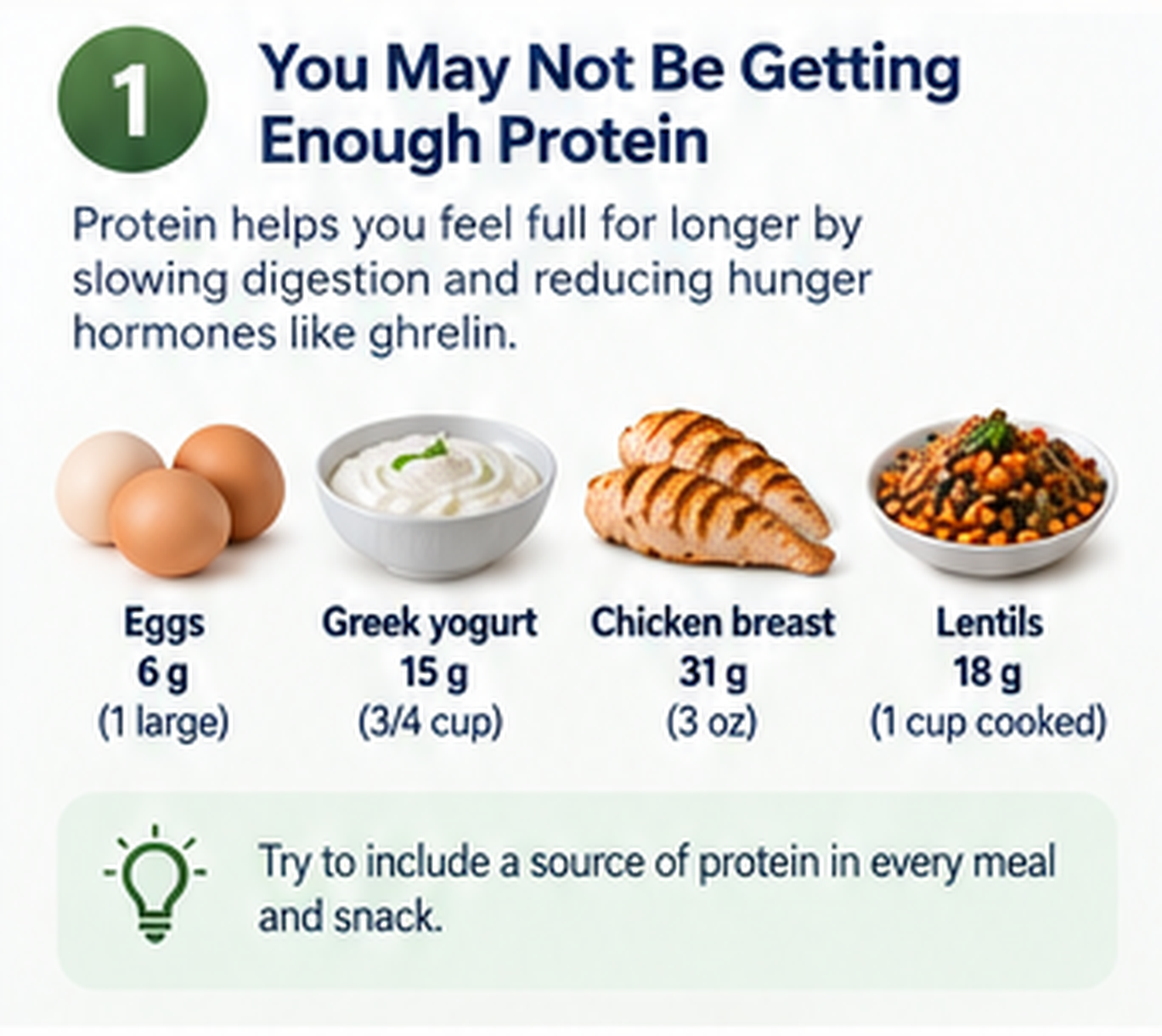
Protein foods can make a meal more substantial and are an important part of a balanced eating pattern. CDC meal guidance recommends prioritizing protein foods at meals and choosing from options such as poultry, seafood, eggs, beans, lentils, nuts, seeds, soy, and dairy without added sugars. See CaloPilot's protein guide for more context on protein targets and food choices.
| Food | Example serving | Approx. protein |
|---|---|---|
| Egg | 1 large | ~6 g |
| Greek yogurt | 3/4 cup | ~15 g |
| Chicken breast | 3 oz cooked | ~25–30 g |
| Lentils | 1 cup cooked | ~18 g |
2. Your Meal May Be Low in Fiber and Volume
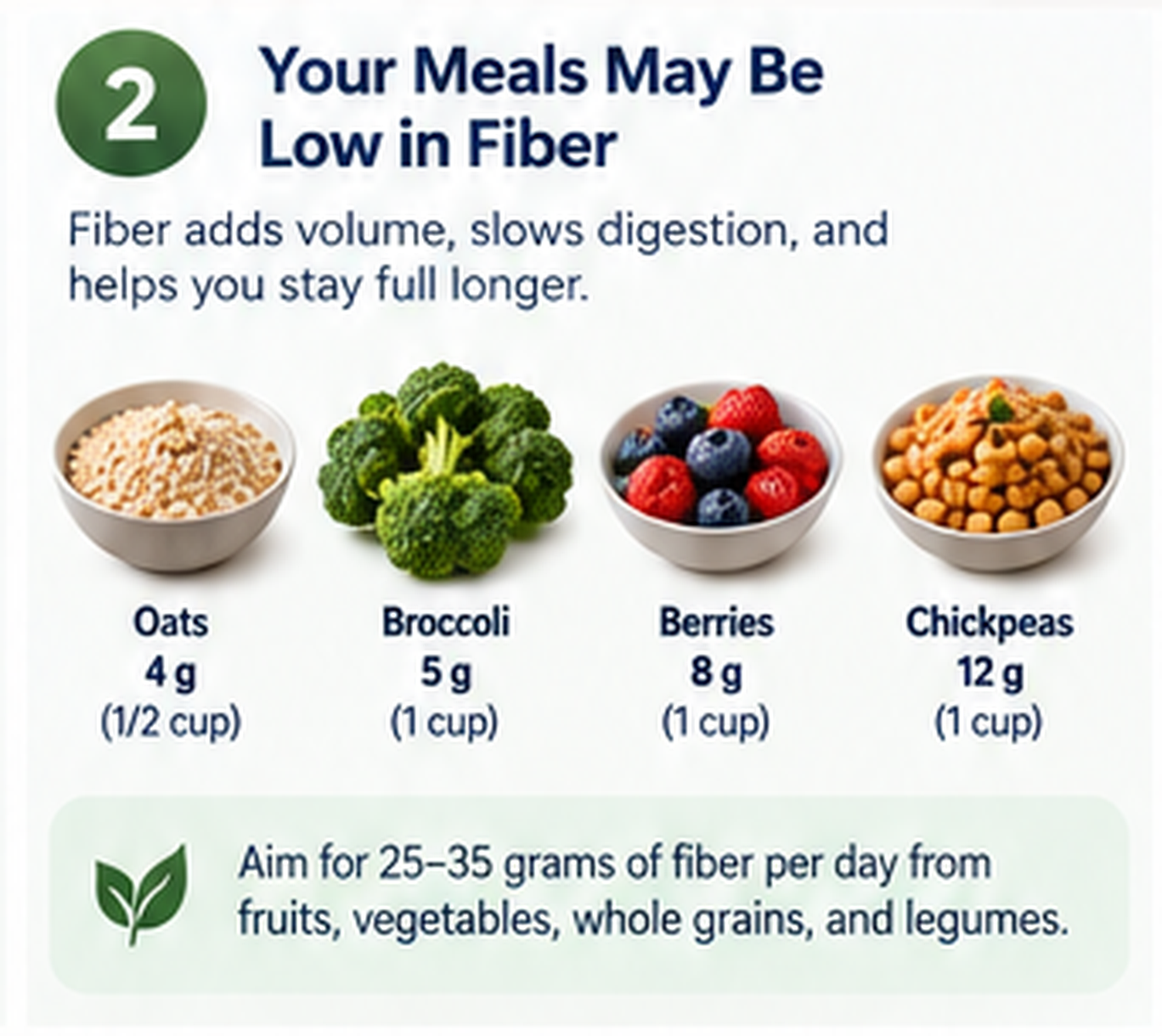
Fiber-rich foods such as vegetables, fruits, whole grains, beans, lentils, nuts, and seeds can help meals feel more filling. The CDC notes that fiber supports digestive health and helps people feel fuller longer. The water and fiber in fruits and vegetables can also add volume with relatively fewer calories. CaloPilot's fiber guide explains common sources and ways to increase fiber gradually.
| Add more of | Examples | Why it may help |
|---|---|---|
| Vegetables | Broccoli, greens, peppers | Adds fiber and volume |
| Whole fruit | Berries, apple, orange | Provides fiber and water |
| Whole grains | Oats, brown rice | Offers a higher-fiber carbohydrate |
| Legumes | Beans, chickpeas, lentils | Combines fiber and protein |
3. You May Be Eating Too Little Overall
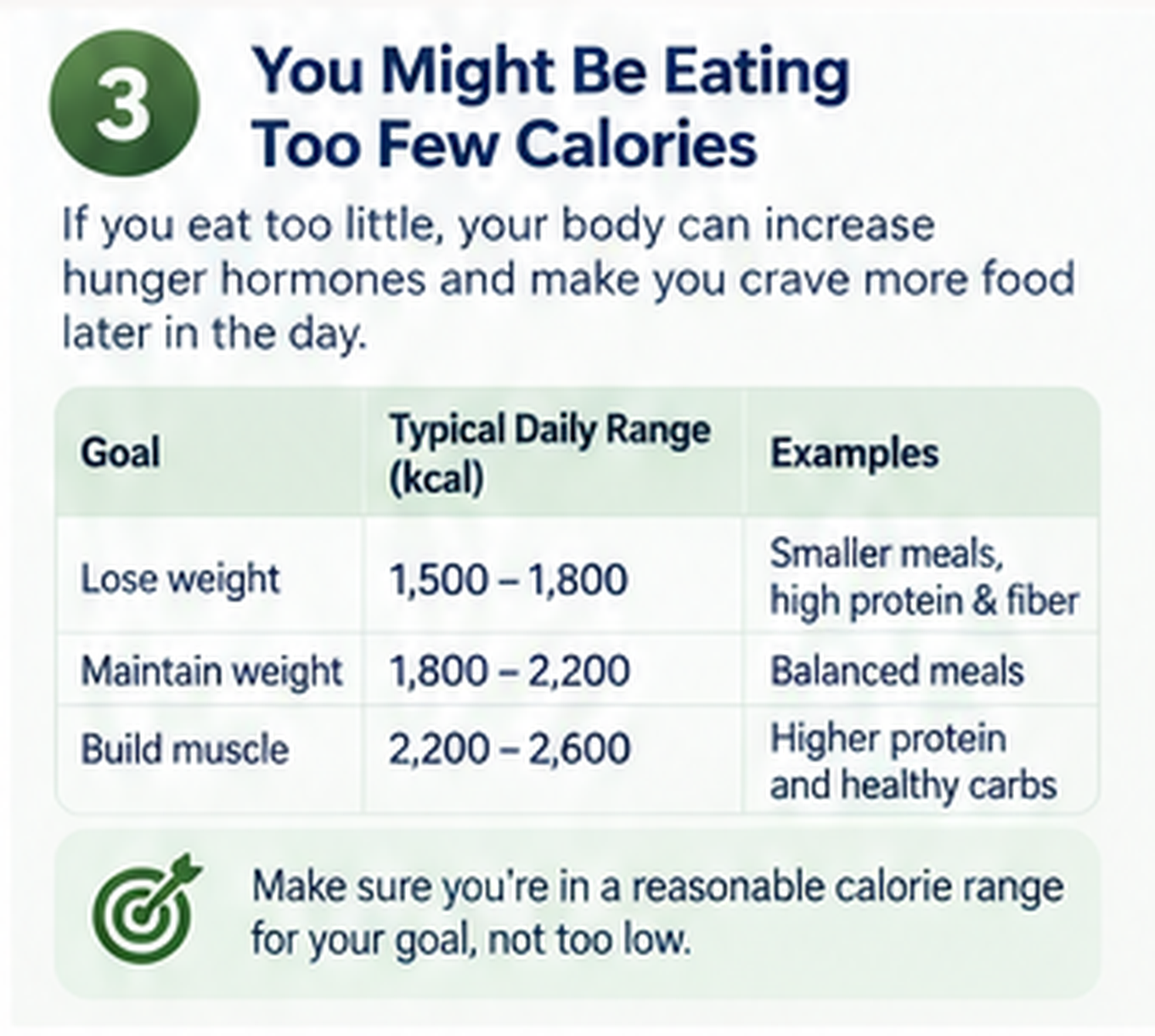
If you are intentionally cutting calories, an overly aggressive restriction can make a plan difficult to maintain. Calorie needs differ by age, sex, height, weight, activity, health, and goals. Rather than copying someone else's target, use an individualized estimate and pay attention to persistent hunger, energy, and how sustainable the plan feels. Read the CaloPilot calorie guide to understand the factors behind an estimated target.
The NIDDK Body Weight Planner can provide adults with a more individualized planning estimate. It is still an estimate, and it is not intended for people who are pregnant or breastfeeding.
4. Meal Composition Can Change How Long It Feels Satisfying
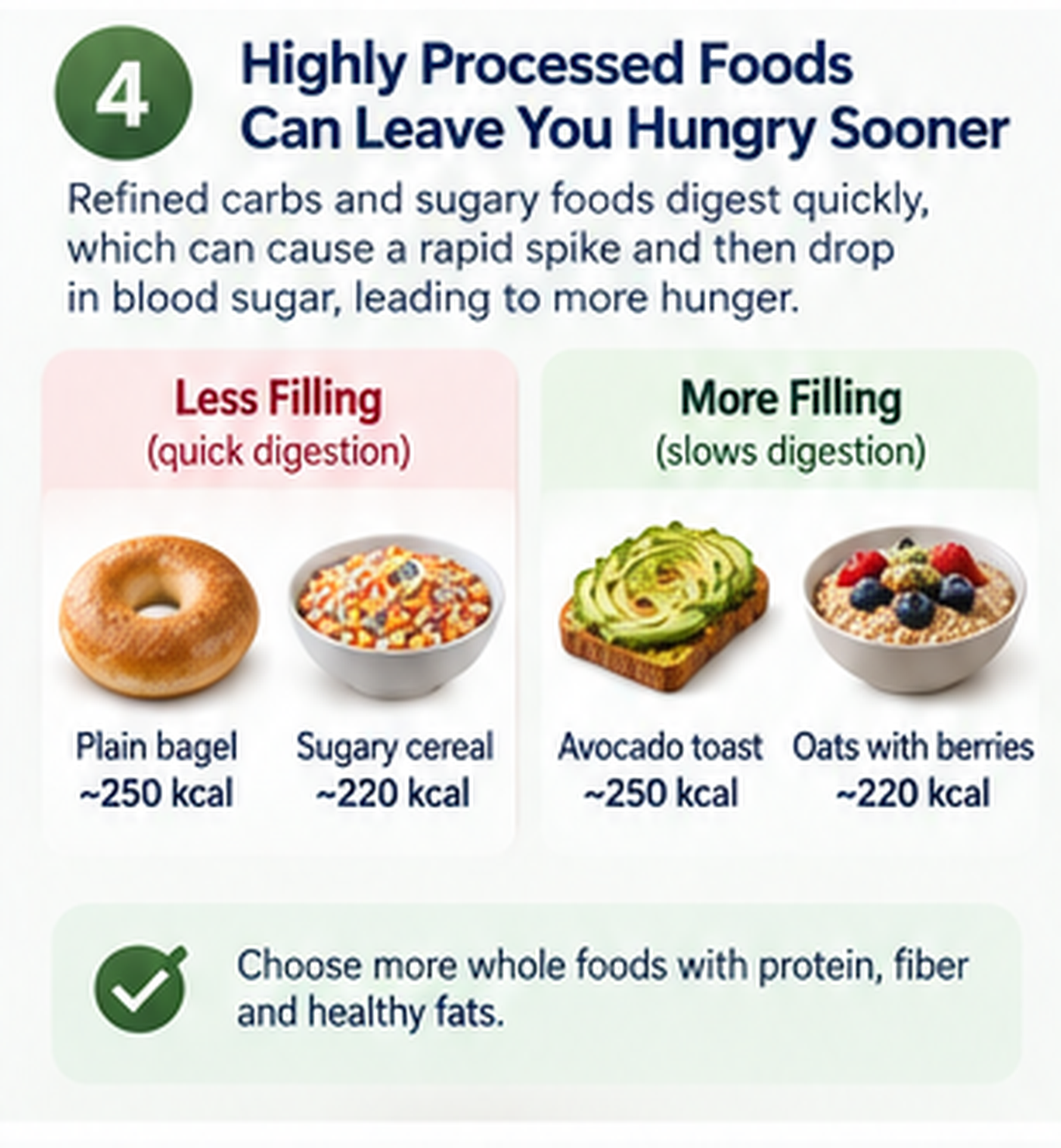
Two meals with similar calories can feel very different. A meal built mostly around refined carbohydrates may provide less protein and fiber than one combining a protein source, vegetables or fruit, a fiber-rich carbohydrate, and some healthy fat. CDC guidance emphasizes a varied eating pattern rather than eliminating an entire food group. The CaloPilot macronutrient guide can help you understand how protein, carbohydrates, and fat fit together.
5. Thirst, Habits, and Your Environment Can Influence the Urge to Eat
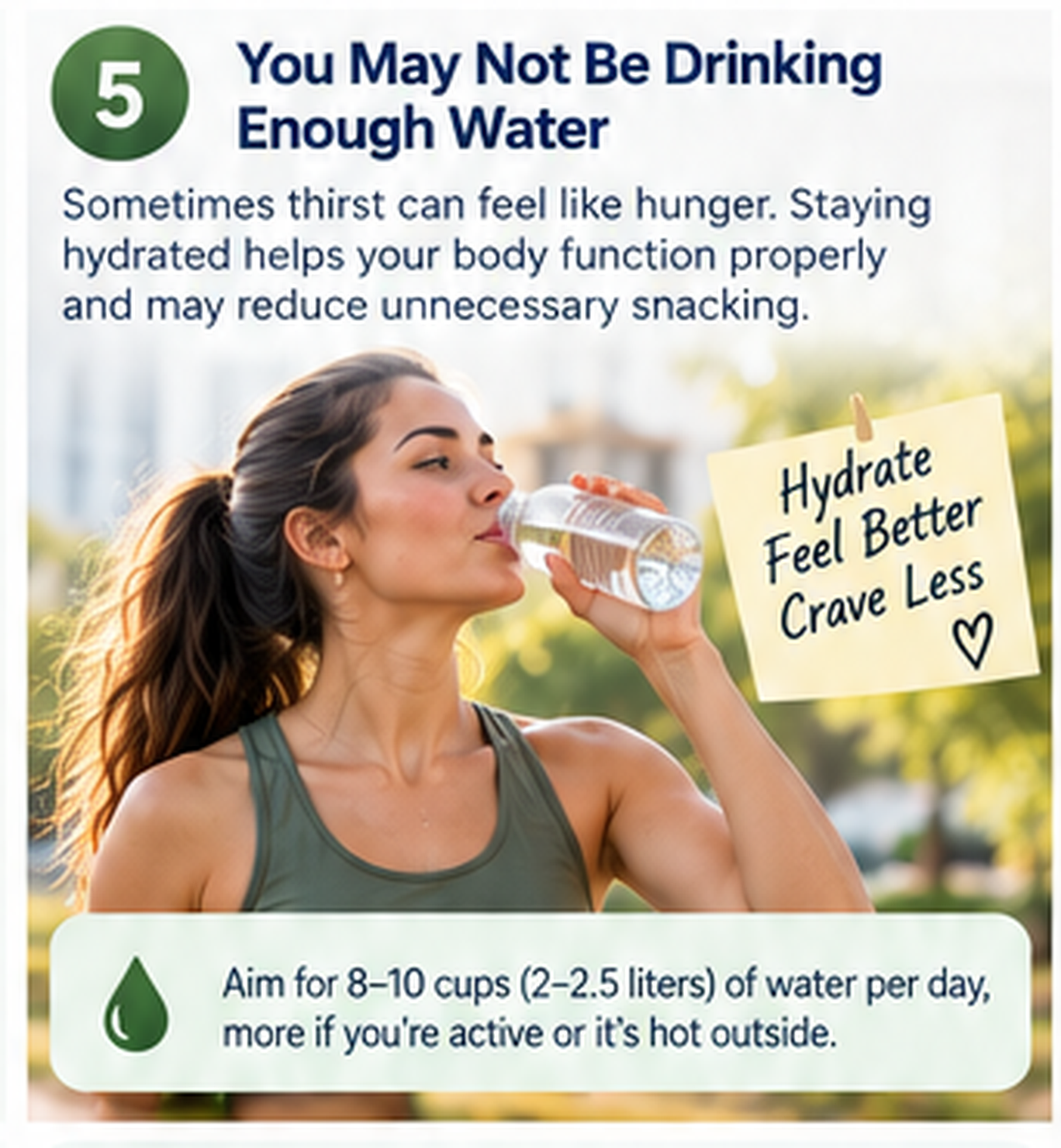
Not every urge to eat begins with physical hunger. NIDDK guidance notes that people sometimes eat in response to boredom, sadness, anger, happiness, or stress. A simple food-and-hunger log can help you notice when, where, and why you tend to eat.
Hydration also matters for health, but there is no single water target for everyone. CDC hydration guidance explains that needs vary with personal and environmental factors. Visit CaloPilot's hydration guide for practical tracking context.
| Before reaching for a snack | Ask yourself |
|---|---|
| Physical hunger | Has it been several hours? Would a normal meal sound good? |
| Hydration | Have I had fluids recently, especially after activity or time in the heat? |
| Habit | Do I usually snack at this time or in this place? |
| Emotion or stress | Am I eating because I feel stressed, bored, upset, or celebratory? |
6. Poor Sleep and Stress Can Increase Hunger
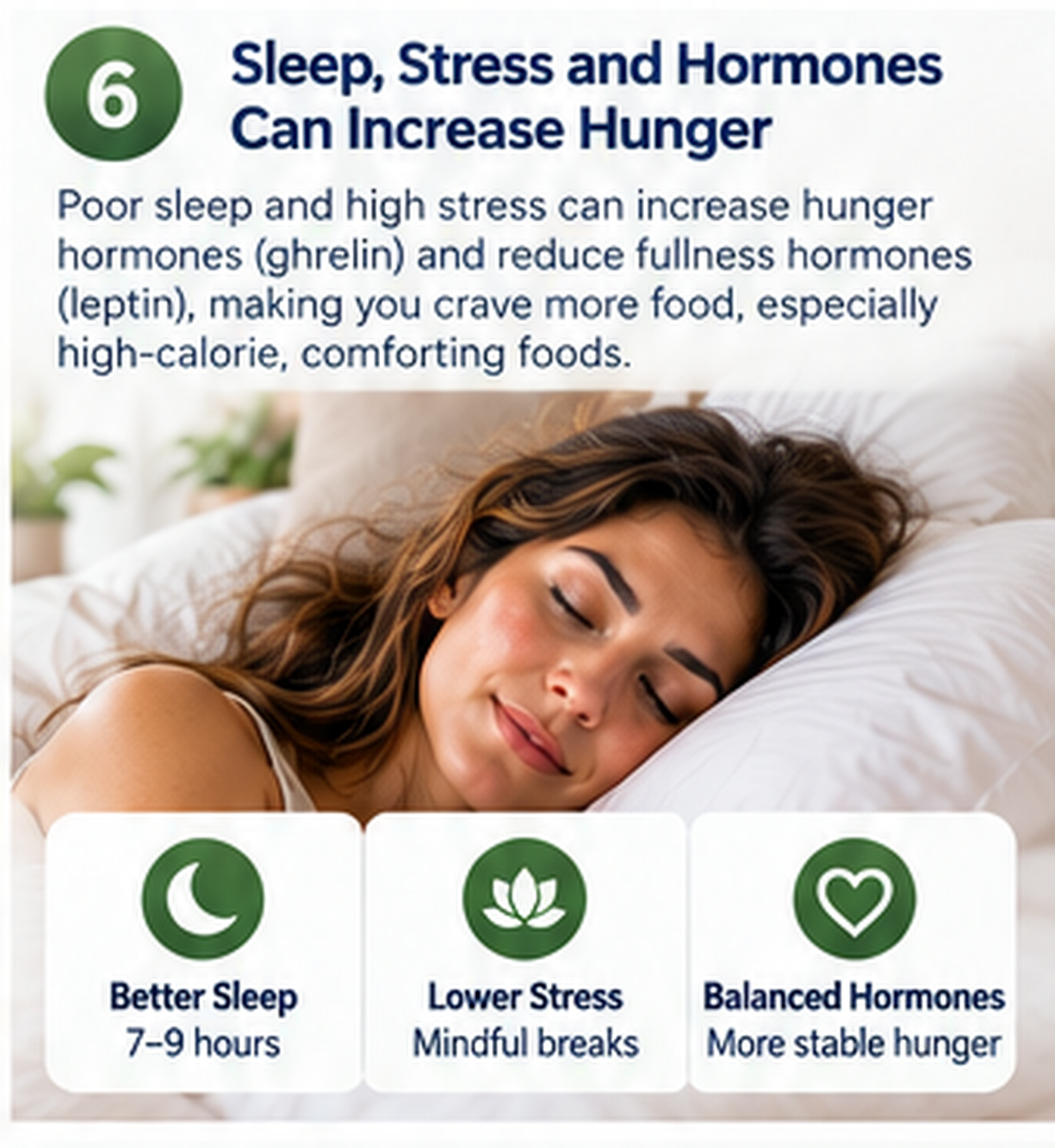
Sleep is closely connected with appetite and food choices. NIDDK reports that too little sleep may make people feel hungrier, consume more calories, and choose less healthy foods. Experts generally recommend 7–9 hours a night for adults ages 18–64 and 7–8 hours for adults 65 and older, though individual needs vary.
- Keep a reasonably regular sleep and wake schedule when possible.
- Notice whether short-sleep or high-stress days change your hunger or snacking pattern.
- Choose a repeatable stress-management strategy such as a walk, relaxation exercise, structured downtime, or social support.
7. Your Meal Timing or Routine May Need an Update
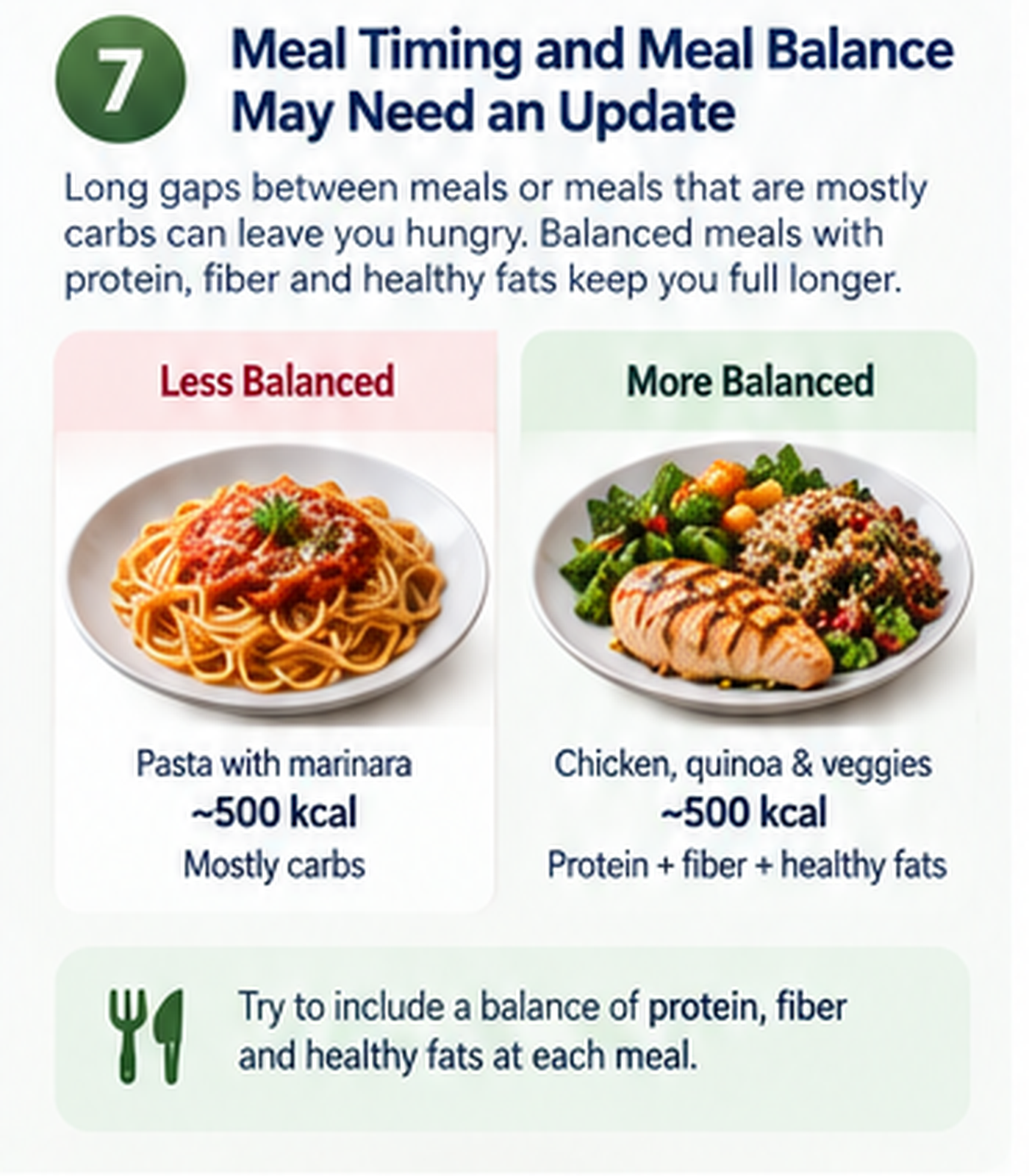
Long gaps between meals can leave some people overly hungry later. CDC guidance on maintaining weight recommends a consistent eating pattern and sustainable behaviors that help avoid getting overly hungry and overeating. The best schedule is the one that fits your life and helps you make balanced choices consistently. If structure helps, explore CaloPilot's meal-planning and weekly-target tools.
| Instead of… | Try… |
|---|---|
| Skipping lunch, then grazing all evening | Plan a balanced lunch or an afternoon snack |
| Coffee only for breakfast when you get hungry early | Add protein and a fiber-rich food |
| Random snacks with no meal plan | Keep a few reliable, balanced meals available |
| Judging one day | Look for patterns across 1–2 weeks |
A Simple Fullness Checklist
- Include a protein source in your meal.
- Add vegetables, fruit, whole grains, beans, or another fiber-rich food.
- Make sure your calorie target is reasonable and appropriate for you.
- Drink fluids regularly, using thirst and individual needs as guides.
- Avoid letting yourself become excessively hungry.
- Aim for adequate sleep and manage stress where possible.
- Track patterns instead of reacting to one meal or one day.
Where CaloPilot Fits
If you are trying to understand why you keep getting hungry, tracking can reveal patterns that are easy to miss. CaloPilot can help you see calories, protein, macros, meals, and longer-term progress in one place. The goal is not to make every meal perfect—it is to understand what you are eating and make small adjustments that fit your goals and preferences.
- Use the food diary and macro dashboard to compare meals that keep you satisfied with meals that do not.
- Log meals with photo, barcode, voice, or food search, then review portions and nutrition estimates.
- Track water, activity, and supporting health signals with CaloPilot's daily health tools.
- Review meal plans and weekly targets when a more consistent routine would help.
- See the complete process on How CaloPilot Works, or download CaloPilot to start tracking.
If weight progress is also a concern, read Why Am I Not Losing Weight? for a separate checklist covering portions, activity, sleep, stress, and weight trends.
Understand your meals. Build better habits. Make progress one day at a time.
Sources and Further Reading
- Centers for Disease Control and Prevention. How to Have Healthier Meals and Snacks.
- Centers for Disease Control and Prevention. Healthy Eating Tips.
- Centers for Disease Control and Prevention. Tips for Increasing Vegetables and Fruits in Your Diet.
- Centers for Disease Control and Prevention. About Water and Healthier Drinks.
- Centers for Disease Control and Prevention. Tips for Keeping Weight Off.
- National Institute of Diabetes and Digestive and Kidney Diseases. Health Tips for Adults.
- National Institute of Diabetes and Digestive and Kidney Diseases. Factors Affecting Weight & Health.
- National Institute of Diabetes and Digestive and Kidney Diseases. Food Portions: Choosing Just Enough for You.
Editorial note: This article provides general education, not a diagnosis or substitute for individualized care. Hunger, calorie needs, and safe dietary changes differ by person. Speak with a qualified health care professional or registered dietitian if hunger is persistent, severe, new, occurs with other symptoms, or if you have a medical condition, take medicines that affect appetite, have a history of disordered eating, or are pregnant or breastfeeding.